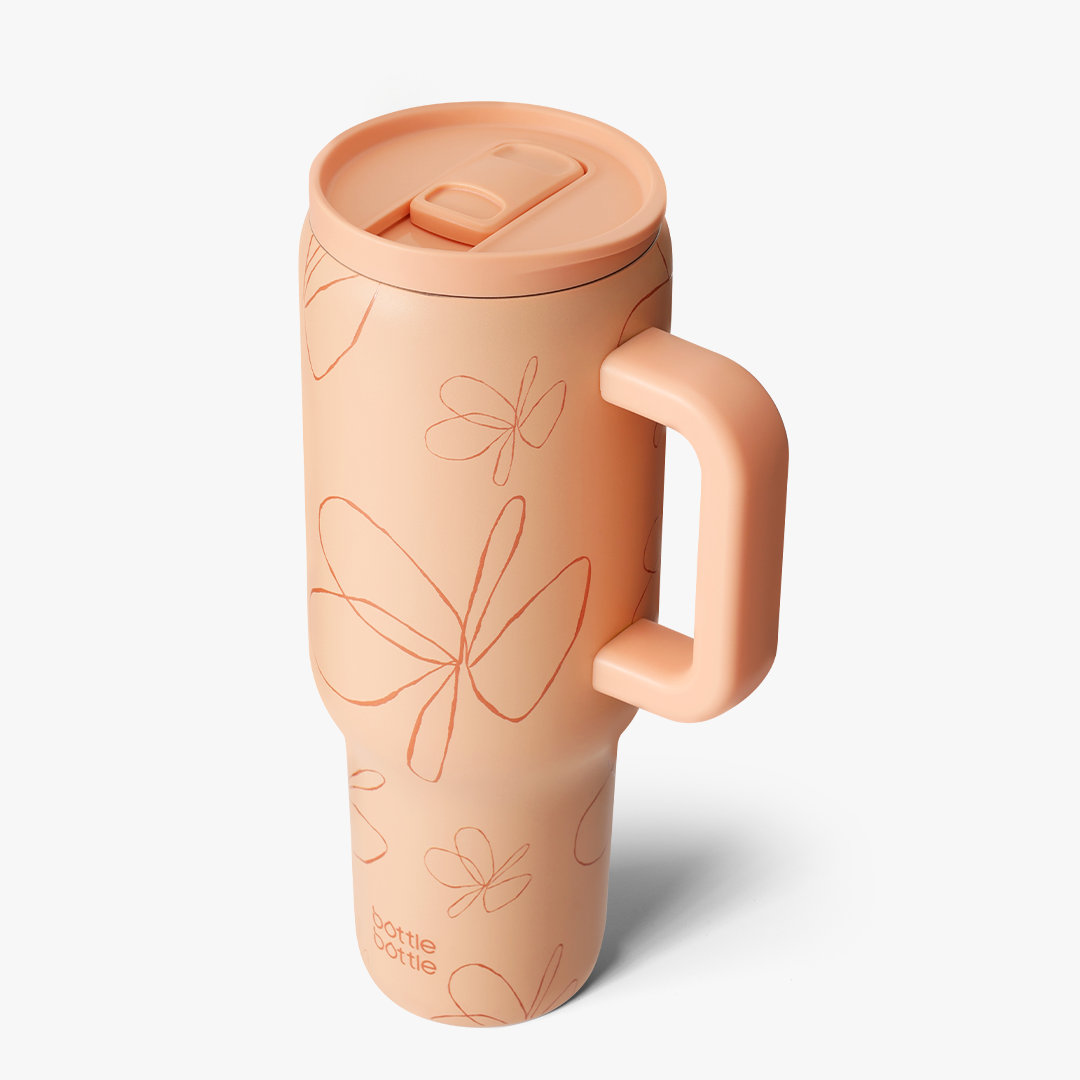
On a trail your bottle stops being an accessory and starts being gear. It gets dropped on rock, baked in the sun, and clipped to a pack that's bouncing around. The bottle that's perfect at your desk can be a liability out here. Here's what to actually look for.
How much water should you carry?
Rule of thumb: about a half-liter (roughly 16oz) per hour of moderate hiking, more in heat. A short 2-hour loop needs 32oz. A longer or hotter day pushes you to 40oz or a bottle plus a reservoir. Underestimating water is the classic outdoor mistake.
Weight is the tension here. Water is heavy, so you don't want to haul more than you'll drink. A liter of water is over two pounds, and that adds up on a long climb. Match the bottle to the trip, not the worst case you can imagine.
Insulated or not?
This one's a real trade. Insulated stainless keeps water cold for hours, which is bliss on a hot climb, but it's heavier and holds less per size because of the double wall. Single-wall stainless is lighter and tougher but your water goes lukewarm.
For day hikes in heat, insulated wins. For fast-and-light or backpacking where every ounce counts, a lot of hikers pick single-wall or plain plastic. Insulated bottles run $28 to $36; the weight is the price you pay for cold. A useful middle ground: carry one insulated bottle for the water you'll actually sip and a light collapsible flask for backup capacity you only need on the longest stretches.
What lid survives the trail?
A sealed screw cap or a locking chug lid. You do not want a straw or a soft push-button spout that pops open when the pack shifts and soaks your gear. Bonus points for a lid with a loop you can clip a carabiner through, so the bottle rides on the outside of the pack.
Who it's not for: if you want to sip hands-free while walking, a rigid bottle is annoying, and a hydration bladder with a hose beats it. Bottles are better at camp and rest stops than mid-stride.
Durability that matters outside
- Stainless over glass, always, for obvious reasons
- A powder-coated grip so wet or sweaty hands hold on
- Wide mouth so you can fill from a stream or drop in a filter
- A dent-tolerant body, because it will hit rock eventually
Wide mouth is underrated
A wide opening lets you refill from a lake or river, fit a screw-on filter, and add snow or ice. It also cleans easily, which matters when the bottle's been in dirt. The tradeoff is a wide mouth pours faster and can splash your face on a bumpy sip. Small price.
Where does the bottle ride?
This decides more than people expect. A bottle buried in your pack means you won't drink until a rest stop, and that's how people get dehydrated without noticing. A bottle in a side pocket you can reach without stopping, or clipped to a shoulder strap, gets used. If you can't grab it while walking, you'll drink less, full stop.
Check that your bottle fits the side pockets of the pack you own before the trip. A 32oz wide-mouth is fat, and plenty of packs have skinny pockets sized for slimmer bottles. A carabiner loop on the lid is the cheap fix when the pocket won't cooperate.
What about cold-weather and altitude?
In freezing conditions, a straw or narrow spout can freeze shut while the bottle body stays liquid. That's the moment a wide-mouth screw cap saves you, since there's no thin channel to ice over. Storing the bottle upside down in your pack also keeps the ice from forming at the drinking end. Little tricks, but they're the difference between water and a frozen brick on a cold summit.
The pick
For most day hikers: a 32oz wide-mouth stainless bottle with a sealed or locking lid and a clip loop, around $30. Insulated if you hike in heat, single-wall if you count grams. Skip anything fragile, anything with a spout that can pop open, and anything you'd be sad to scratch. Out here, a scratched bottle that still works beats a pretty one that leaked into your pack.