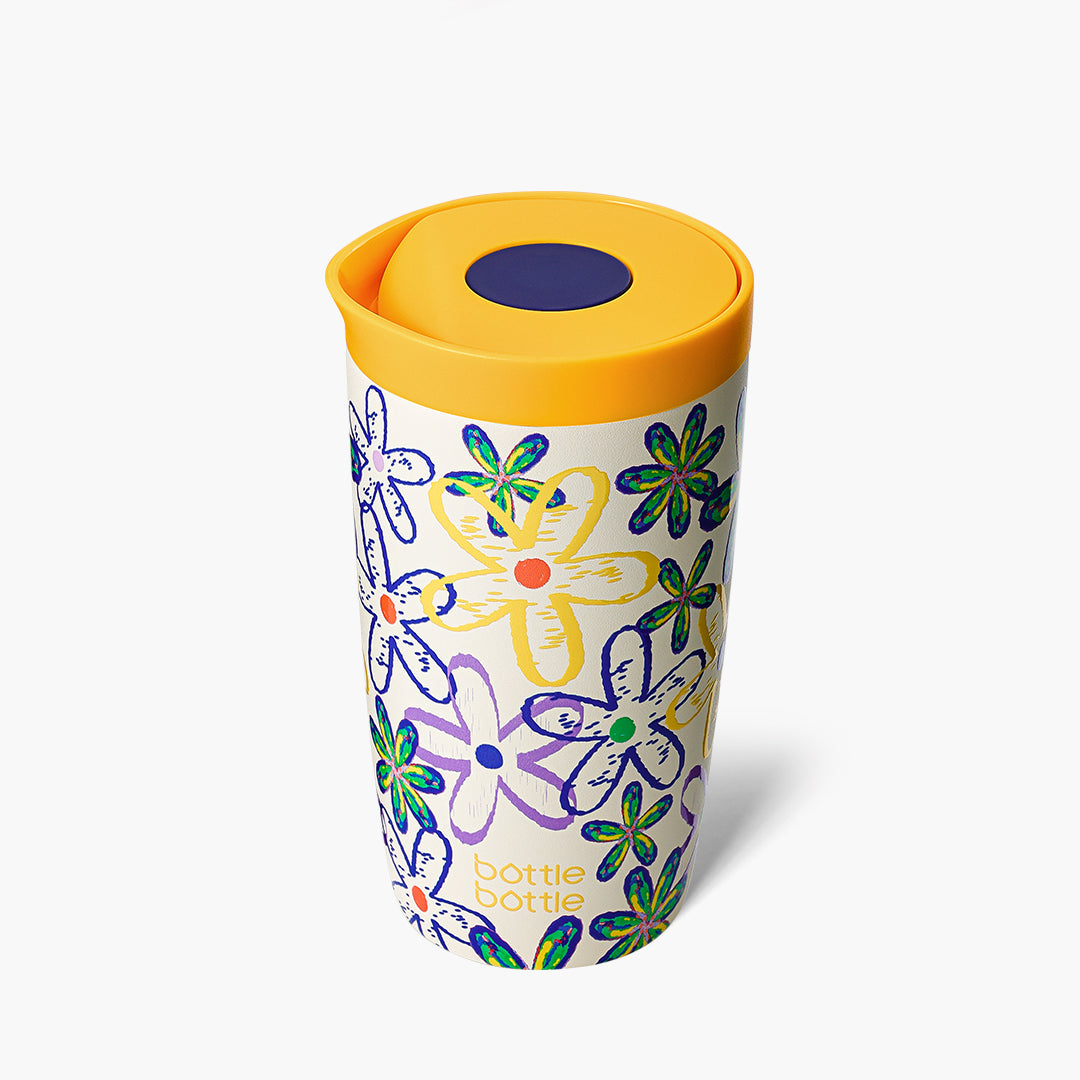
Two stainless bottles sit next to each other. One's $16, one's $34, and they look nearly identical. So where does the money go? Some of the gap is real engineering, and some is just a logo. Let's separate the two so you don't overpay or underbuy.
What the extra money genuinely buys
Real differences show up in a few places. Better vacuum insulation actually keeps water cold longer, sometimes 24 hours versus 6. The lid gaskets on premium bottles seal tighter and last longer before they warp. And the powder coating resists chips and holds grip instead of flaking after a month.
Threading quality matters too. Cheap bottles cross-thread and leak at the cap; better ones screw smooth for years. These are the things you're paying for, and for a bottle you use daily, they're worth something.
What you're not really paying for
A chunk of a premium price is brand and color drops. A limited-edition pastel doesn't hold water any better than the standard black. You're also often paying for a name that's popular right now, which is fine if you like it, but it's marketing, not performance.
Steel is steel, mostly. Both budget and premium bottles usually use food-grade 18/8 stainless. The metal itself isn't where the quality gap lives. It's the insulation, the lid, and the finish. So when a brand charges double, ask which of those three it actually improved, because sometimes the answer is none of them and you're paying purely for the name on the side.
Where budget bottles are totally fine
If your bottle lives on a desk near a sink, a $15-18 bottle is genuinely all you need. Insulation for six hours is plenty when you refill anyway, and a desk bottle never gets the abuse that reveals cheap construction. Don't let anyone talk you into $34 for a job a $16 bottle does fine.
Who premium isn't for: light users, gift-givers on a budget, and anyone who tends to lose bottles. If you leave one at the gym every few months, buy cheap and replace without pain.
Where premium earns it
Spend up if the bottle takes a beating or if cold-for-hours matters. Hikers, tradespeople, hot-climate commuters, and anyone who fills once in the morning and needs ice-cold water at 4pm. Here the better insulation and tougher lid pay for themselves.
A simple price map
- $15-20: solid everyday bottle, shorter cold retention, fine for desk and short trips
- $22-28: the value sweet spot, good insulation and lids without the logo tax
- $30-36: long cold retention, premium gaskets, rugged coatings, brand cachet
How long does each tier actually last?
This is where the math gets interesting. A $16 bottle used hard might give you a year or two before the coating chips and the gasket leaks. A $28 bottle treated the same often runs five years or more. Spread across its life, the pricier bottle can cost less per year, assuming you don't lose it. That last part is the catch, because bottles walk off constantly.
So the honest calculation is part durability, part personality. If you keep track of your things, buying up saves money over time. If bottles vanish from your life every few months, the cheap one is the rational choice no matter what the spec sheet says.
What about resale trends and hype?
Some premium bottles ride a wave of popularity, with limited colors that sell out and resell for more. That's a fashion thing, not a hydration thing. If owning the current it-bottle brings you joy, that's a valid reason to buy, just be clear with yourself that you're paying for the trend, not better water. The trend fades; the bottle stays the same bottle.
The honest takeaway
The $24-28 range is where most people should shop. You get the real engineering, better insulation, decent lids, tough coating, without paying the extra $8-10 that's mostly logo. Go cheaper if it's a desk bottle by a sink. Go premium only if you'll test what premium is for.
Don't confuse price with how much you'll like it. The bottle you enjoy using every day is worth more than the expensive one you left in a cabinet because the lid annoyed you.