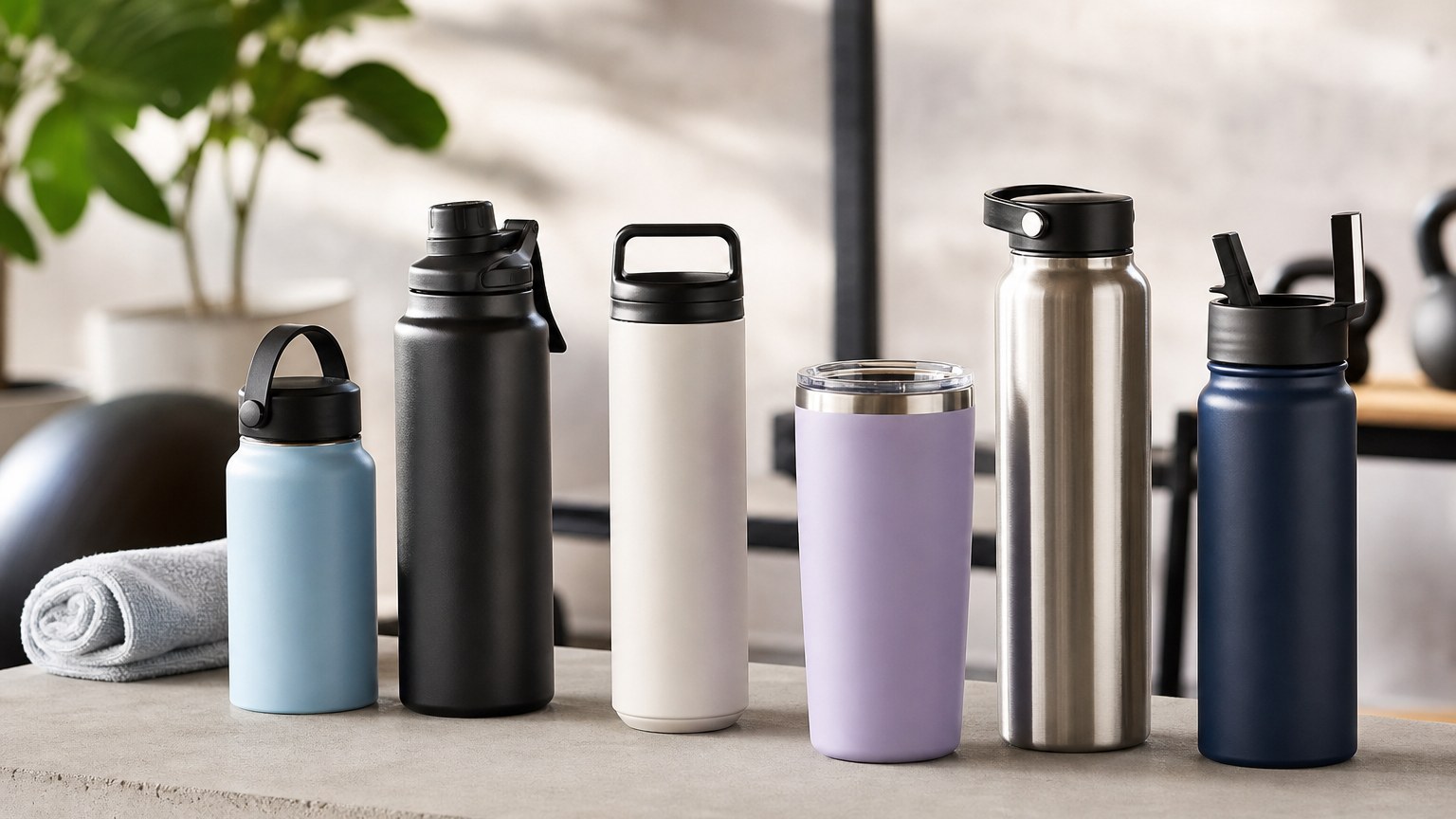
A gym bottle has a specific job. It needs to deliver water fast between sets, survive being dropped on rubber flooring, and rinse clean after a protein shake. Plenty of otherwise good bottles fail at the gym because they were designed for a calmer setting. Here is what actually matters when you are sweating.
Fast, one-handed drinking
Between sets you have seconds, not minutes. A screw cap you have to twist off with both hands is a nuisance mid-workout. Look for a flip cap, a straw lid, or a chug-style spout you can open one-handed and drink from without tipping your head all the way back. This single feature separates a good gym bottle from a frustrating one.
Grip you can trust with wet hands
Sweaty palms and smooth steel do not mix. A bottle with a textured body, a silicone sleeve, or a built-in handle is far less likely to slip out of your grip and clatter across the floor. A carry loop or handle also lets you hook the bottle on a machine or grab it quickly.
Capacity that matches your session
- Short workouts: A 24 oz bottle covers most hour-long sessions without a refill.
- Long or intense training: Step up to 32 or 40 oz so you are not interrupting a leg day to hunt for a fountain.
- Hot yoga or endurance work: Go large, because you will sweat far more than you expect.
Easy cleaning is non-negotiable
If you use your bottle for protein shakes, pre-workout, or electrolyte mixes, a wide mouth is essential. Narrow openings trap residue that turns sour fast. A wide-mouth bottle lets you reach in with a brush and get it truly clean, which you will need to do often given what gym bottles carry.
Insulation: nice, not essential
Cold water is more refreshing during a hard workout, and an insulated steel bottle keeps ice water genuinely cold through a long session. That said, insulation adds weight and cost. If you refill from a cold fountain anyway, a lighter single-wall or plastic bottle may suit you better. Decide based on whether your gym's water is already cold.
Durability under real conditions
Gym bottles get dropped, kicked, and tossed in bags with dumbbells. Stainless steel dents but survives; glass is a poor choice here. If you prefer plastic for the weight savings, pick a tough Tritan bottle rather than a flimsy one that will crack.
Matching the bottle to your training style
Different workouts make different demands on a bottle. If you lift weights with long rests between sets, a larger insulated bottle sits happily on the floor and rewards you with cold water each time you return to it. For circuit training or classes where you are constantly moving, a lighter bottle with a secure sport cap that you can grab on the fly serves better. Runners and cyclists often prefer a soft flask or a bottle that fits a specific holder. Endurance athletes should also think about adding electrolytes, which means a wide mouth for mixing and a bottle that cleans easily afterward so residue does not build up.
A final practical tip: keep your gym bottle separate from your everyday one if you use it for anything besides water. Protein and electrolyte residue demands frequent, thorough cleaning, and mixing that duty into a bottle you also drink plain water from all day tends to mean neither gets cleaned often enough. A dedicated gym bottle you scrub after every session stays fresh and ready, which is exactly what you want when you reach for it mid-workout.
Prioritize one-handed drinking, a secure grip, a wide mouth for cleaning, and enough capacity for your typical session. Get those four right and the bottle will keep up with you instead of slowing you down.