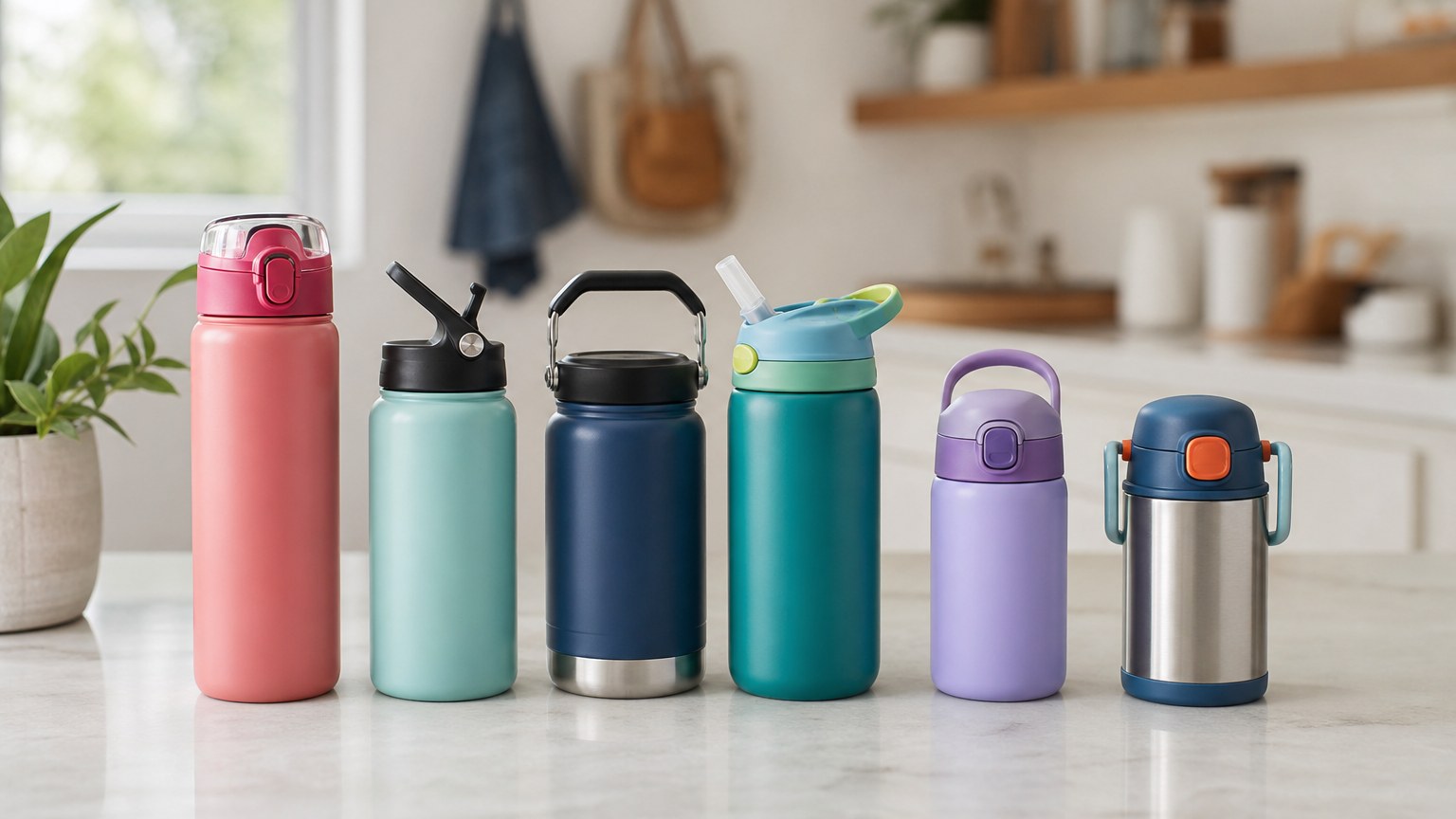
Choosing a bottle for a child means solving a different set of problems than choosing one for yourself. It has to be spill-proof enough to survive a backpack, simple enough for small hands to operate alone, and easy enough for a busy parent to clean every single day. Get those right and you avoid soggy homework and daily battles.
Spill-proof comes first
Kids drop bottles, throw them in bags upside down, and forget to close lids. A genuinely leak-proof design is the top priority. Straw lids with an automatic seal, or bite-valve sport caps, tend to work well because they close themselves and do not spill even when tipped. Test any bottle by filling it and shaking it hard before you trust it with school books.
Easy for small hands
- Simple opening: A one-button flip lid or a straw a child can use without unscrewing anything encourages independent drinking.
- Grippable shape: A narrower body or a built-in handle suits small hands better than a wide adult bottle.
- Manageable weight: A full 32 oz steel bottle is too heavy for a young child. Match the size to the kid.
Right-sizing capacity
For toddlers and preschoolers, 10 to 14 oz is plenty and keeps the weight down. For primary school kids, 16 to 20 oz covers a school day with a refill. Teenagers can handle adult sizes. Buying too big means a heavy bottle that gets left behind, which defeats the purpose.
Materials and safety
Look for BPA-free plastic, stainless steel, or bottles that clearly state food-grade materials. Steel bottles are durable and do not harbor odors, but they dent and can be heavy. Quality plastic bottles are lighter and more forgiving when dropped on a hard floor. Whatever the material, avoid small detachable parts on bottles for very young children.
Cleaning is a daily reality
Kids' bottles get milk, juice, and mystery snacks in them, so they need frequent thorough cleaning. Straw and valve lids have the most nooks, so choose one that comes apart easily and, ideally, is dishwasher safe. A bottle brush and a thin straw brush should be part of your kit. Bottles that cannot be fully disassembled tend to grow mold in hidden channels.
Durability and replacement parts
Children are hard on gear. A bottle that survives repeated drops onto concrete will outlast several flimsy ones. Bonus points for brands that sell replacement straws and gaskets, since those are the parts that wear out or get lost first. Being able to replace a chewed straw is cheaper than buying a whole new bottle.
Helping kids build the habit
A great bottle only helps if the child actually drinks from it, so a little encouragement goes a long way. Let kids pick the color or design when you can, since a bottle they feel is theirs gets carried with pride rather than forgotten. Involve them in filling it each morning as part of getting ready for school, which builds ownership of the routine. For younger children, a bottle with visual markings or fun graduations turns drinking into a small game of reaching the next line. And model the behavior yourself; kids who see parents carrying and drinking from a bottle naturally treat it as a normal part of the day rather than a rule imposed on them.
Finally, keep a realistic view of the bottle's lifespan. Children grow, lose things, and outgrow designs, so you will likely replace a kids' bottle more often than your own. That is a good reason to favor solid mid-range options with available replacement parts rather than the most expensive bottle on the shelf. A durable, easy-to-clean bottle in the right size, that your child is happy to carry, does its job well for the season or two it needs to, and that is exactly the right expectation to set.
Prioritize leak-proofing, easy operation, appropriate size, and simple cleaning. A bottle a child can open, carry, and drink from independently, without soaking their bag, is the one that actually gets used every day.