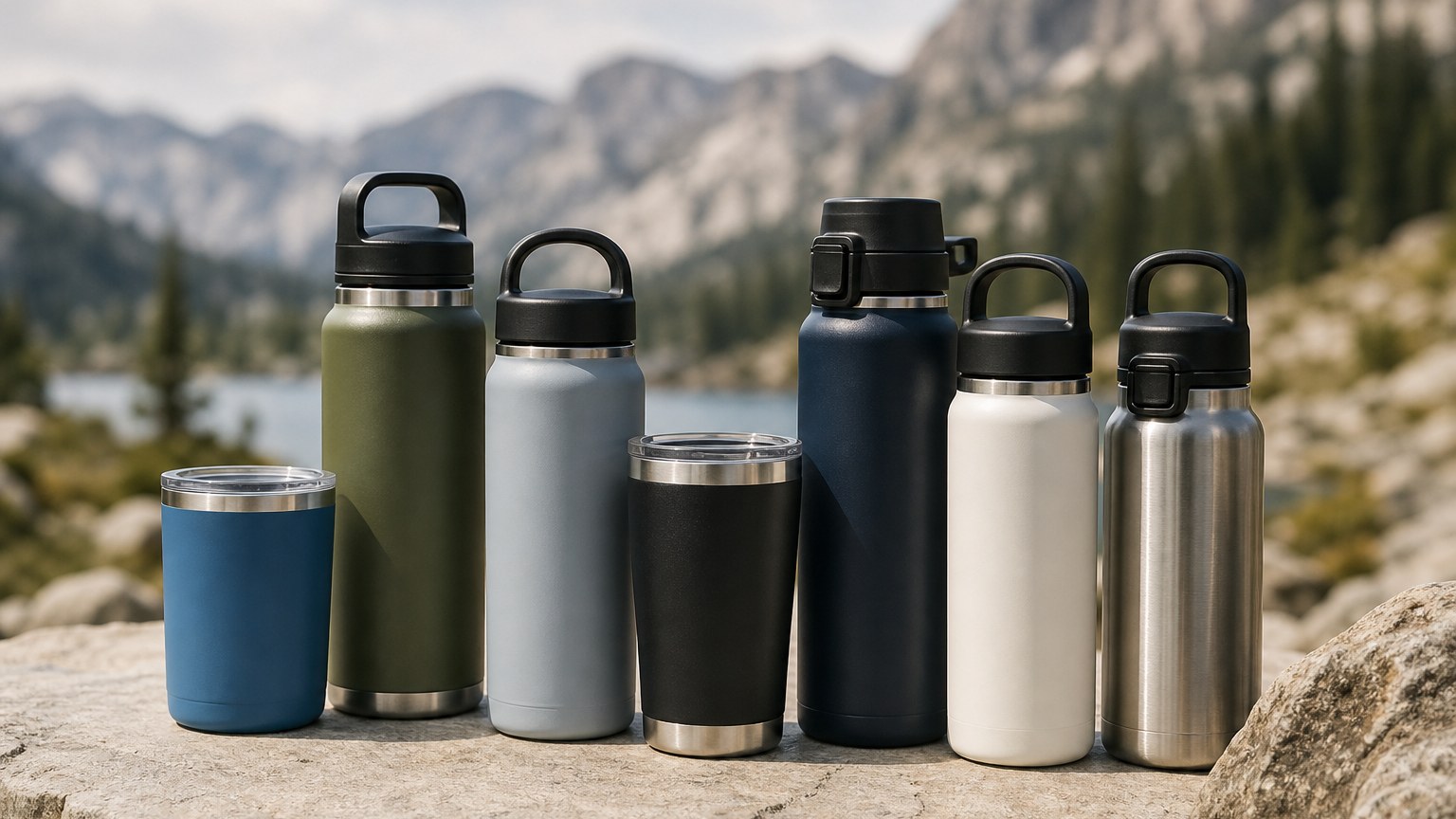
Out on a trail, your water bottle stops being a lifestyle accessory and becomes gear. It has to earn every gram it adds to your pack, hold enough water between sources, and never fail when you are miles from a refill. The priorities shift meaningfully from everyday use, so a different set of rules applies.
Weight versus capacity
Water is heavy, and so is a thick insulated bottle. On a long hike you are constantly balancing how much water you must carry against how much the container itself weighs. For day hikes in mild weather, a lighter single-wall bottle or even a soft flask may beat a heavy insulated one. For hot climates or long stretches without water sources, capacity wins and you carry the weight.
Insulated or not?
- Hot weather: Insulation keeps water cool and drinkable when the air is baking, which genuinely helps you keep drinking.
- Cold weather: An insulated bottle can carry a hot drink and resists freezing longer, a real advantage in winter.
- Weight-focused trips: If you count grams, a thin bottle or collapsible flask saves meaningful weight over an insulated steel one.
Mouth width and freezing
A wide mouth is easier to fill from a stream or filter, easier to add electrolyte tablets to, and easier to clean on multi-day trips. In freezing conditions a wide mouth also matters because ice forms first at the opening; a narrow neck can freeze shut while a wide one still pours. Many experienced winter hikers store their bottle upside down so ice forms at the base, not the lid.
Durability and reliability
A bottle that cracks on a rock or leaks into your pack is a serious problem far from home. Stainless steel is the workhorse choice: it survives drops, does not shatter, and can even be set near a fire to warm water in a pinch. Avoid glass entirely. If you go with a plastic or soft bottle, test the seal thoroughly before you trust it with your dry gear.
Attachment and access
You will drink more if water is easy to reach. Side pockets on a pack, a carabiner loop on the bottle, or a hydration sleeve all help. A bottle buried at the bottom of your bag is a bottle you underuse, which leads to under-drinking and fatigue on the trail.
A sensible trail kit
Many hikers carry a combination: a durable wide-mouth steel or hard plastic bottle as the main vessel, plus a lightweight collapsible flask for extra capacity that packs down when empty. This gives you reliability and flexibility without committing to carrying maximum weight the whole time.
Treating water as a safety item
On any serious outing, water stops being a comfort and becomes a safety consideration, which should shape how you choose and carry it. Always plan for more than you think you need, because running dry miles from a source is dangerous, not just uncomfortable. Know where your refill points are along the route, and carry a backup means of treating water, whether a filter or purification tablets, so a stream becomes a resource rather than a gamble. A bright bottle color is easier to find if you set it down on the trail, and a leak-proof lid protects the rest of your gear. Redundancy matters outdoors in a way it never does at a desk.
Break your gear in before it matters. Test a new bottle on short local walks before trusting it on a big trip, so you learn its quirks, whether the lid seals reliably and how it rides in your pack, while the stakes are low. Discovering a leaky cap or an awkward fit on your kitchen counter is a minor annoyance; discovering it ten miles into a hike is a real problem. A little familiarity turns a bottle from an unknown into dependable gear.
Match your choice to the trip. Hot and long favors capacity and insulation; fast and light favors minimal weight. Above all, choose something that will not fail you, because on the trail your bottle is not a convenience, it is a necessity.