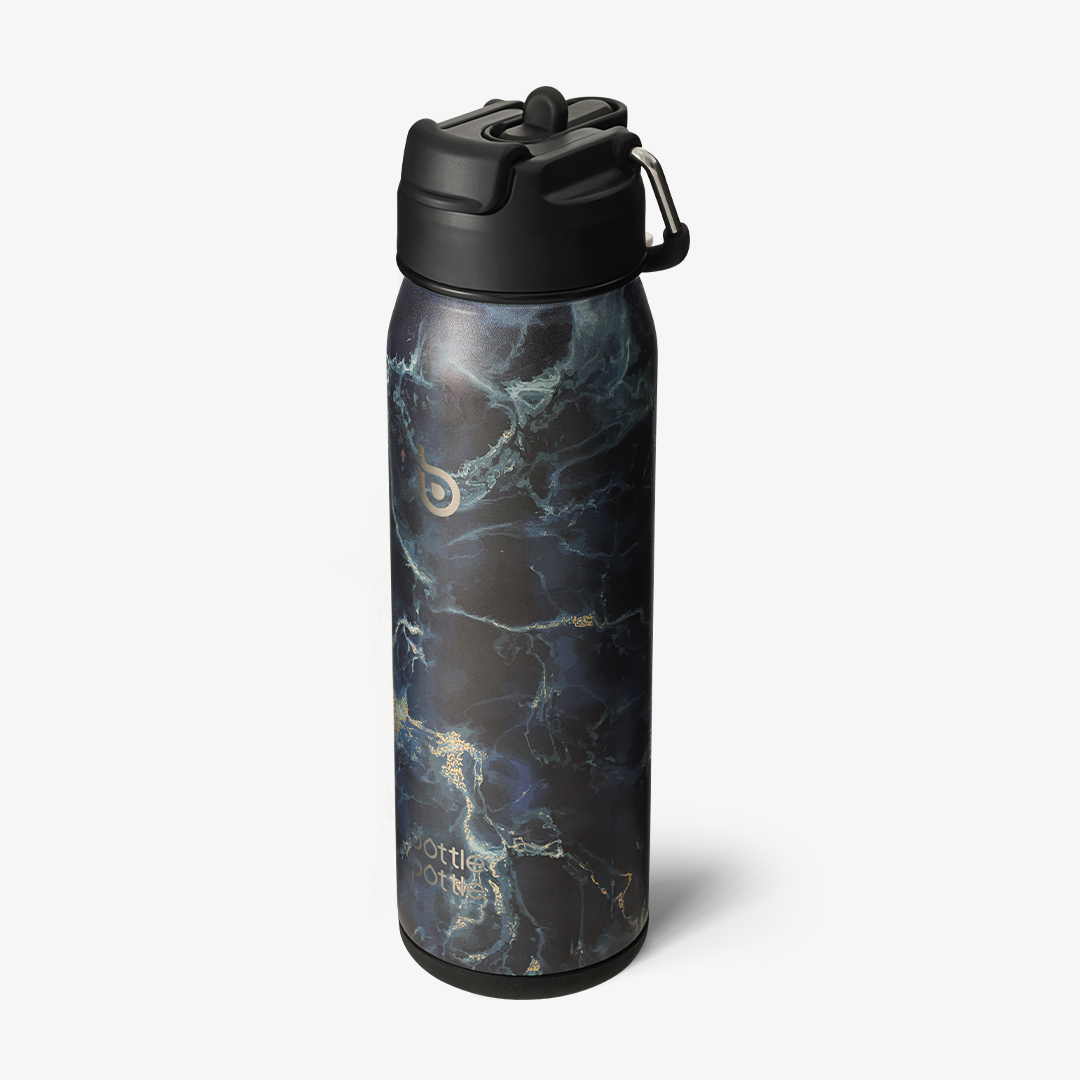
Two bottles sit side by side. One says 18/8 stainless, the other says 18/10. The second costs a few dollars more and somehow feels fancier. Are you actually getting anything for that? Short answer: for a water bottle, barely. But it's worth knowing what those numbers mean so nobody upsells you on a difference you'll never notice.
What the numbers stand for
Both 18/8 and 18/10 are types of 304 stainless steel, the food-grade workhorse used in everything from kitchen sinks to cookware. The two numbers are the percentages of two metals mixed into the iron:
- The first number, 18, is chromium, always 18%
- The second number, 8 or 10, is nickel
Chromium is the important one. It reacts with oxygen and forms an invisible, self-healing layer on the surface that stops rust. Scratch it and the layer reforms. That 18% chromium is why the inside of your bottle doesn't corrode when you leave water in it overnight. Nickel's job is more about polish, corrosion resistance in harsh conditions, and that slightly warmer, less gray shine.
So 18/10 has more nickel. Does that help me?
In a cookware pot that sits in salty, acidic sauce on a hot burner for years, yes, the extra 2% nickel buys a bit more corrosion resistance and a nicer finish. In a bottle that holds water, tea, and the occasional electrolyte drink at room temperature, the difference is close to meaningless. Both grades are 304 steel. Both resist rust well past the lifespan of the bottle. You're paying for a rounding error.
Honestly, if a brand leans hard on "premium 18/10" as the headline selling point of a water bottle, be a little skeptical. The vacuum seal, the lid design, and the quality of the welds matter far more to how the bottle actually performs.
The grade that actually matters: 304 vs 201
Here's where you should pay attention. The real quality split isn't 18/8 versus 18/10, it's 304 versus 201.
201 stainless is a cheaper alloy that swaps out expensive nickel for manganese. It looks nearly identical on the shelf and costs less to produce, which is why you'll find it in bargain bottles and gas-station tumblers. The problem is that 201 is more prone to corrosion, especially with acidic drinks like juice or anything left sitting for days. Some low-grade batches have also raised questions about what leaches out over time. For the inner wall that touches your drink, 304 is the standard you want.
How do I know which one I'm getting?
Legit brands print it. Look for "304 stainless," "18/8," or "food-grade 304" on the bottle or listing, they all point to the same good steel. If a bottle is suspiciously cheap and vague, just says "stainless steel" with no grade, there's a fair chance the inner wall is 201 or an unspecified alloy. That's the gap worth caring about, not the 8-versus-10.
What about 316 marine steel?
A few premium bottles advertise 316 stainless, sometimes called surgical or marine grade. It adds molybdenum, which fights corrosion from salt and acid even better than 304. For a water bottle this is genuinely overkill, it's designed for boat fittings and medical tools. If you're the type who drinks a lot of citrus water or lives somewhere with harsh tap water, it's a small nice-to-have. For everyone else, 304 is already plenty, and 316 mostly buys you bragging rights and a higher price.
A quick ranking, worst to best
- 201 / unspecified "stainless": avoid for the drink-facing wall
- 304 (18/8): the sweet spot, safe, durable, affordable
- 304 (18/10): marginally nicer, marginally pricier, no real bottle benefit
- 316: overkill for water, useful only in edge cases
Does the grade change taste or cleaning?
People sometimes blame a metallic taste on the steel grade. It's almost never that. A tinny taste from a 304 bottle usually traces back to residue, a dirty gasket, or minerals in your tap water, not the alloy. Both 18/8 and 18/10 are equally inert against water, so if a new bottle tastes off, wash it with baking soda and rinse well before you blame the metal. Cleaning behavior is identical between the two grades too, neither one is easier to scrub or more stain-resistant in normal use, so that's not a reason to pay up either.
The takeaway is simple. Don't lose sleep over 18/8 against 18/10, that decision won't change your experience. Do make sure the bottle is 304, because that's the line between steel that shrugs off years of daily use and steel that might pit, stain, or corrode. Check the label, and if the grade isn't listed anywhere, treat the silence as an answer.