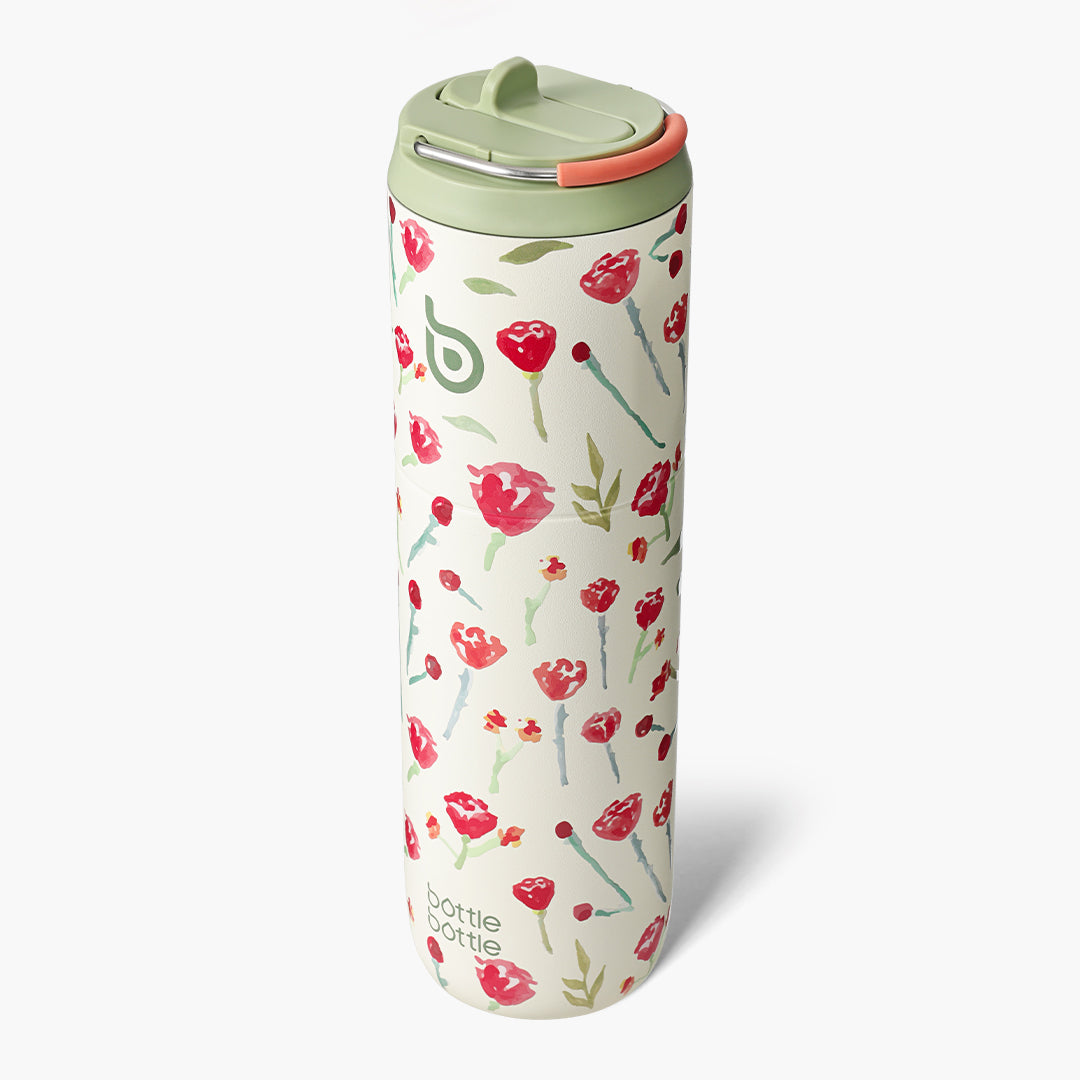
Every so often a viral post claims water bottles "tested positive for lead" and the internet panics. So are stainless steel bottles safe to drink from every day, or is there something to worry about? The honest answer is that the drink-facing steel is one of the safest options you can choose, but there's a real detail behind the lead scare worth understanding, and it's not where people think.
The steel that touches your drink
Food-grade 304 stainless steel, the 18/8 on the label, is the same material used in commercial kitchens, surgical tools, and food processing equipment. It's chosen precisely because it's inert: it doesn't react with water, tea, or most drinks, doesn't rust under normal use, and doesn't leach meaningful amounts of anything into what you're sipping. Millions of professional kitchens run on it for a reason. For plain water, it's about as safe a container as exists.
So where does the lead talk come from?
The sealing dot at the bottom
Here's the part that fueled the scare. Many vacuum bottles are sealed during manufacturing at a small spot on the base, where the air was pumped out of the vacuum cavity. On some designs, that seal is covered by a little dot of solder, and historically some of that solder contained lead.
The crucial detail: that sealing dot is on the outside bottom of the bottle, sealed under the vacuum layer, and it never contacts the liquid inside. Your drink touches only the inner 304 steel wall. The lead, if present at all, is physically separated from anything you consume, tucked behind a protective cap on the exterior base.
The viral tests that "found lead" were people scratching off that bottom cap and swabbing the solder underneath, a spot no drink ever reaches and you'd never normally expose. It made for alarming videos, but it's not how the bottle is used.
Should you still care?
A bit, yes, for peace of mind. Reputable brands have moved to lead-free sealing methods, and many now advertise "no lead used in construction" precisely to answer this concern. If it matters to you, buy from a brand that states its construction is lead-free, and don't pry off the bottom cap. Both are easy. A bottle with an exposed or damaged base cap is the only real (and rare) scenario worth avoiding.
What about the coatings and paint?
The colored exterior, powder coat or paint, is on the outside and doesn't touch your drink either. Quality bottles use finishes rated for durability, and since they're not food-contact surfaces, they're a low concern. If a bottle's exterior is chipping badly, it's a cosmetic and grip issue, not a safety one, because the inside is still sealed 304 steel.
Stainless vs the alternatives
Put in context, stainless holds up well:
- Plastic bottles: risk of BPA and other bisphenols leaching, especially with heat, and they hold odors and scratches that harbor bacteria.
- Aluminum bottles: usually need an internal liner (often plastic or epoxy) because bare aluminum reacts with acidic drinks, so you're back to trusting the liner.
- Glass: genuinely inert and safe, but heavy and breakable.
- Stainless 304: inert, durable, doesn't need a liner, no BPA in the metal.
For daily use that balances safety and practicality, 304 stainless is hard to beat.
The safety habits that actually matter
The realistic risks with any bottle aren't exotic chemicals, they're mundane:
- Bacteria from not cleaning it, this is the actual health risk for most people, and it's fully in your control.
- Cheap unspecified steel, the 201-versus-304 issue, lower grades resist corrosion less well. Buy stated 304.
- Acidic drinks left sitting, citrus water or juice held for days is better in glass or stainless than aluminum, and shouldn't sit indefinitely in anything.
Quick checklist for a bottle you can trust
- Inner wall stated as 304 or 18/8 stainless
- Brand notes lead-free construction if you want that reassurance
- BPA-free, food-grade plastic and silicone on the lid and seals
- You clean it regularly and dry it open
The lead headlines make for good clicks, but they point at a sealed spot on the bottom that never meets your water. Drink from the inside of a real 304 stainless bottle, keep it clean, and you're using one of the safer, more boring options on the shelf, which, when it comes to what you drink from every day, is exactly what you want.