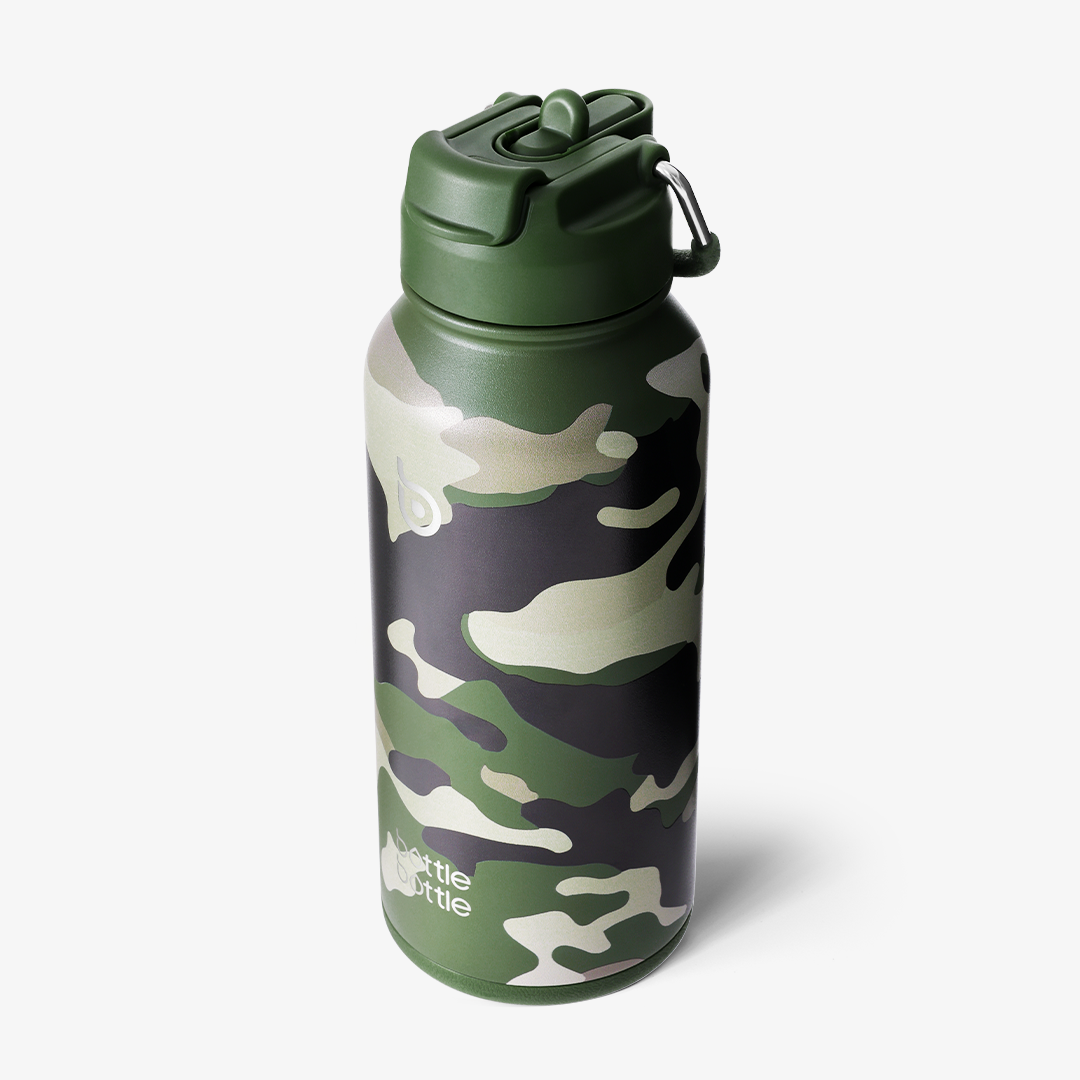
"BPA-free" is printed on nearly every bottle now, right next to "food-grade" and a handful of other reassuring phrases. Some of it is meaningful, some of it is marketing filler, and a little of it is answering a question that doesn't even apply to your bottle. Let's sort out which is which.
What is BPA, and should you care?
BPA, bisphenol A, is a chemical used to make certain hard plastics and resin linings. The concern is that it can leach in small amounts into food or drink, especially with heat, and it behaves a bit like a hormone in the body. Regulators still debate the dose that matters, but plenty of people would rather just avoid it, which is why "BPA-free" became a selling point.
Here's the catch for stainless bottles: the steel itself never contained BPA in the first place. BPA lives in plastics, not metal. So a "BPA-free" stainless bottle is technically true but slightly beside the point, the steel was always going to be BPA-free. The label really only matters for the parts that are plastic.
The plastic parts are where it counts
Your bottle isn't all steel. The lid, the straw, the gasket, the sip spout, the threads, these are usually plastic or silicone, and they touch your drink. That's where "BPA-free" earns its keep. When you check a bottle, you're really checking those components. Good brands specify the plastic, often polypropylene (PP, recycling code 5), which is stable and food-safe, and use food-grade silicone for the seals.
What "food-grade" actually promises
Food-grade means a material has been deemed safe for contact with food and drink, meeting standards for what can migrate out of it. For the inner steel wall, food-grade means 304 stainless (the 18/8 you'll see on labels). For the plastic and rubber bits, it means they've passed contact-safety testing.
It's a genuinely useful term, but it's also unregulated as a marketing phrase in a lot of places, anyone can print it. Pair it with a specific material callout (304 steel, PP #5, food-grade silicone) and it means something. On its own, floating with no specifics, treat it as a hint rather than a guarantee.
The materials you actually want to see
- Inner wall: 304 (18/8) stainless steel, sometimes 316 on premium bottles
- Hard lid plastic: polypropylene, PP, or recycling code 5
- Gaskets and seals: food-grade silicone
- Straws: silicone or PP
If a listing names these, that's a good sign the maker isn't hiding cheap materials behind a vague "BPA-free" sticker.
What about the other bisphenols?
When BPA got a bad reputation, some manufacturers swapped in cousins like BPS and BPF. They dodge the "contains BPA" label but aren't clearly safer, the research is thinner and mixed. This is one reason to favor bottles that specify polypropylene or silicone rather than just shouting "BPA-free," because PP and food-grade silicone don't rely on bisphenols at all.
Where materials meet real life
Two practical notes. First, hot liquids speed up any leaching from plastic, so if you're using a bottle for coffee or tea, the quality of the lid plastic matters more than for cold water. A cheap lid that's fine with cold water all day might be a worse idea for a bottle you fill with 190 F tea every morning. Second, worn or cracked plastic and old, stretched silicone gaskets are worth replacing, degraded material sheds more and traps more gunk. Many good bottles sell replacement lids and seals for a few dollars for exactly this reason, and swapping a $4 gasket beats tossing a $25 bottle.
Do you actually need to test or verify any of this?
For most people, no. You're not going to run a lab assay on your water bottle, and you shouldn't have to. The practical move is to buy from a brand that states its materials plainly and skip the ones that stay vague. If you want an extra layer of confidence, look for third-party contact-safety testing mentioned in the product details, but don't treat its absence as proof of danger, plenty of solid bottles just don't advertise it. The bigger everyday risk isn't the material at all, it's not cleaning the bottle, which lets bacteria build up regardless of how good the steel and plastic are.
The honest bottom line
For a stainless bottle, "BPA-free" on the steel is a freebie, it was never at risk. Spend your attention on the parts that aren't steel: what the lid, straw, and gaskets are made of. A bottle that clearly states 304 steel, PP lids, and food-grade silicone seals is telling you something real. One that just repeats "BPA-free" three times and names no actual materials is telling you something too, mostly that it's hoping you won't ask.