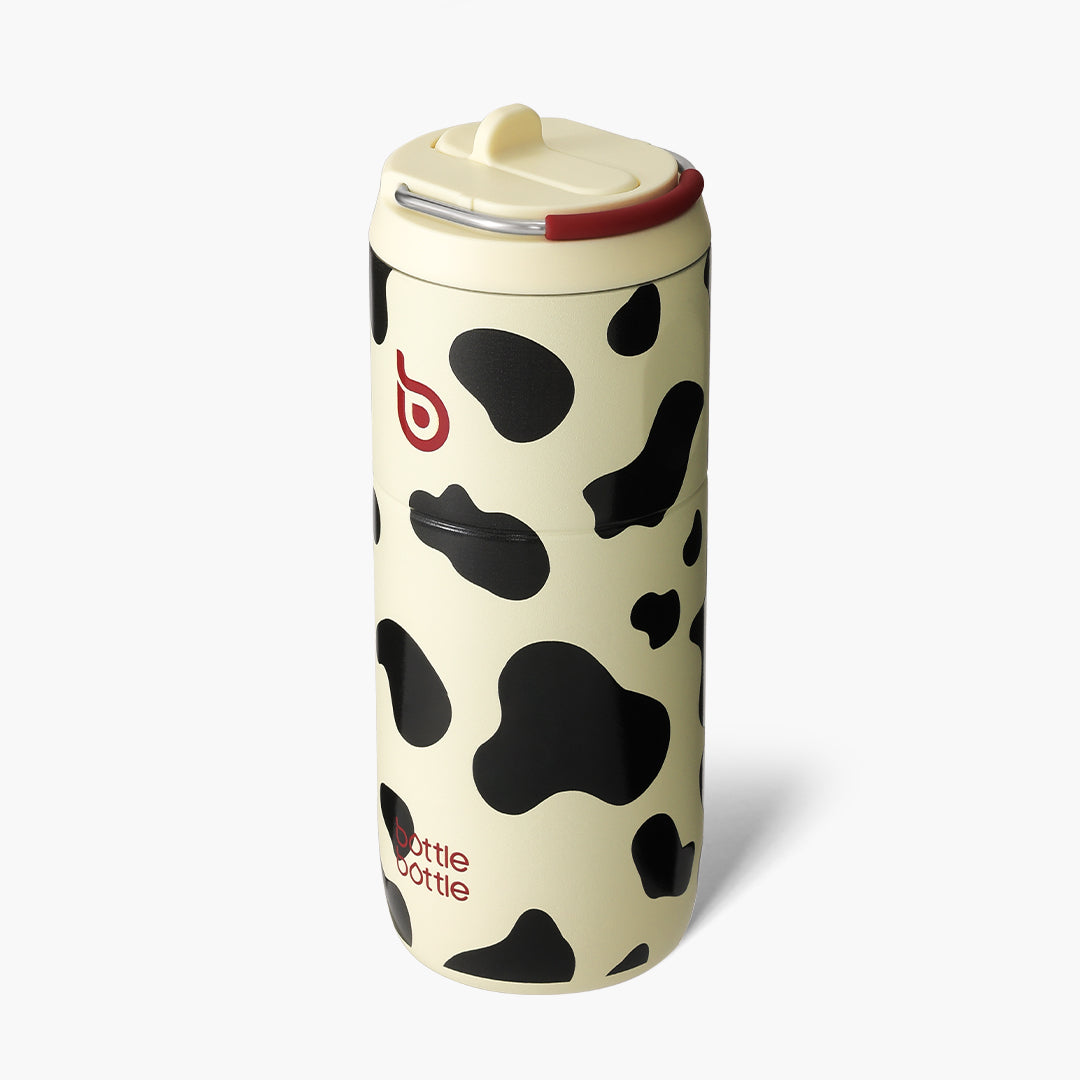
You open your bottle after a long weekend and get hit with a smell somewhere between old coffee and gym locker. A quick rinse doesn't touch it. The good news: the steel is almost never the problem, and the fix is cheap. The bad news: you've probably been ignoring the two spots where the funk actually lives.
Where the smell really comes from
Stainless steel doesn't hold odors, it's non-porous. What holds smells is the buildup on and around it: a thin film of coffee oils, protein from milk or shakes, mineral deposits, and, most of all, bacteria and mildew growing in the parts you never scrub. Two culprits stand out.
- The gasket, that silicone ring tucked into the lid. Pop it out and you'll often find a dark, slimy line of gunk hiding underneath. This is odor central.
- The straw and spout, narrow tubes a bottle brush never reaches, where residue sits in the dark and stays damp.
If your bottle smells and you've only ever rinsed the main chamber, you've been cleaning the one part that was probably fine.
The everyday clean (do this most days)
Hot water, a drop of dish soap, and a long-handled bottle brush for the inside. Get the threads at the top where drink splashes and dries. Rinse well. Take the lid fully apart, pull the gasket out, and wash each piece separately. Air-dry everything upside down with the lid off, dampness left overnight is how the smell starts in the first place.
Should I put it in the dishwasher?
Check the bottle first. Many double-wall vacuum bottles say hand-wash only, because prolonged dishwasher heat can, over time, stress the vacuum seal or fade the exterior coating. Lids and straws are usually top-rack safe even when the body isn't. When in doubt, hand-wash the body and dishwasher the parts.
The deep clean (once a week, or when it smells)
Pick one of these depending on the problem:
For general smell and residue: baking soda
Add a heaping teaspoon of baking soda, fill with warm water, cap it, and let it sit for a few hours or overnight. Baking soda neutralizes odors rather than just masking them. Shake, scrub, rinse. This handles most everyday funk.
For mineral buildup and stubborn stains: white vinegar
Fill with a mix of about one part white vinegar to three parts water, let it soak 20 to 30 minutes, then scrub and rinse thoroughly. Vinegar dissolves the mineral scale that tap water leaves behind and cuts through coffee staining. Rinse well, the vinegar smell disappears once dry.
For deep sanitizing: diluted bleach, used carefully
For a bottle that had milk or protein sit and turn, a very dilute bleach solution (a teaspoon per quart of water) for a few minutes will sanitize it. Rinse extremely well afterward, several times. Don't mix bleach with vinegar, ever, the combination makes toxic gas. Use one or the other, never together.
Getting into the straw and spout
This is the step people skip. A thin straw brush, the pipe-cleaner kind, costs a couple dollars and reaches where nothing else does. Run it through the straw and the drinking spout every deep clean. If a straw is badly fouled, soak it in the baking soda solution first, then brush. Many bottles sell replacement straws cheaply, sometimes it's easier to just swap a $3 straw than to fully rescue a nasty one.
Stopping the smell before it starts
- Never store the bottle sealed with the lid on, trapped moisture breeds smell. Store it open, lid off, fully dry.
- Empty and rinse the same day, especially after milk, juice, coffee, or shakes. Sugary and dairy drinks turn fastest.
- Take the gasket out to dry, not just the lid.
- Replace worn gaskets and straws, cracked silicone traps gunk you can't fully clean out.
When the smell won't leave
If you've deep-cleaned every part, replaced the gasket and straw, and a metallic or off smell still lingers, it's usually one of two things: a lid you can't fully disassemble (some cheap lids trap water in sealed cavities), or you're smelling the plastic itself off-gassing on a brand-new bottle. New-bottle plastic smell fades after a couple of baking-soda soaks and some airing out. A permanently trapped-water lid is a design flaw worth a replacement lid or a different bottle.
The steel will outlast all of this. Take the lid apart, dry it open, hit it with baking soda when it acts up, and that funk becomes a rare event instead of a weekly surprise.