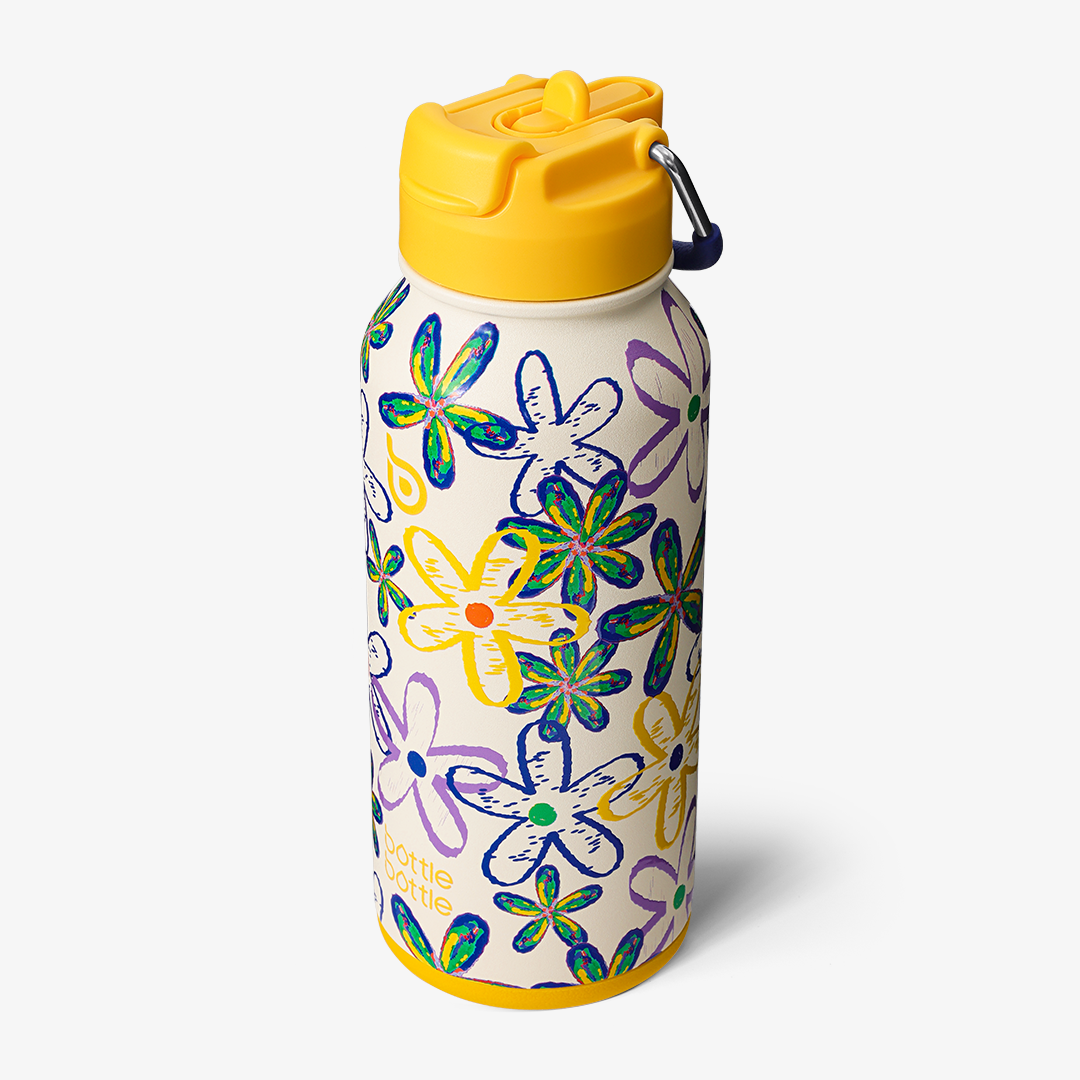
The label promised 24 hours cold. You filled it with ice at 8 a.m., and by mid-afternoon the ice is gone and the water's cool at best. You didn't get scammed, exactly, but the number on the box and the number in your hand rarely match. Here's why, and what actually stretches the cold out.
Where does the "24 hours" number come from?
Lab tests. A bottle gets filled to the brim with ice water, capped, and left in a controlled room around 68 to 72 F with no sunlight, no handling, no opening. Under those conditions a good 20 oz vacuum bottle really can hold cold for most of a day, because "cold" in the test just means the water hasn't crossed some threshold, not that ice is still floating.
Your day looks nothing like that. You open it a dozen times, it sits in a sunny car, it's half full by noon, and the room might be 80 F. Every one of those cuts into the number.
The four things quietly stealing your ice
1. Opening the lid
Each time you unscrew the top, cold air pours out and warm room air pours in. Ten sips over a morning is ten little resets. A bottle with a straw lid or a small sip spout holds cold noticeably longer than a wide-mouth chug lid, simply because less air swaps each time.
2. How full it is
A bottle that's half water and half air warms faster, because that pocket of trapped air heats up quickly and works on your remaining drink from the inside. Ice mass helps too, more ice, more cold reserve. This is why a nearly full bottle beats a half-empty one of the same size.
3. A warm bottle to start
If the bottle's been sitting in a hot cabinet, your first pour spends its cold just chilling the steel. Rinse it with cold water first, or drop a few ice cubes in and swirl for 30 seconds before the real fill. Small habit, real difference.
4. Sun and hot cars
Radiant heat is the one thing vacuum insulation can't fully block. A dark bottle baking on a car dashboard at 120 F will lose cold far faster than the same bottle in the shade. No bottle wins this fight, so don't set it up to lose.
Size changes everything
A big 32 oz jug holds cold way longer than a slim 12 oz bottle, and it's not just more liquid. The math is about the ratio of surface area to volume. A larger bottle has proportionally less outer surface for its contents, so heat has less relative area to sneak in through. If cold retention is your top priority, size up. A 40 oz tumbler full of ice can genuinely keep cubes overnight.
Realistic numbers
For a decent double-wall vacuum bottle used like a normal person, opened regularly, kept indoors, here's what to actually expect:
- Water still cold and drinkable: 8 to 14 hours, easy
- Some ice still present: 5 to 10 hours depending on size and how often you open it
- Ice fully surviving 24 hours: only in big bottles, kept shut, in a cool room
If your bottle can't keep water cool for even a few hours, that's not normal, and it points to a real problem.
When cold retention suddenly gets worse
A bottle that used to hold ice all day and now goes warm in two hours has likely lost its vacuum, usually from a hard drop that dented the inner wall. You'll sometimes see the outside start sweating, which a healthy vacuum bottle should never do. There's no repair for a broken vacuum. If it's still under warranty, that's a legitimate claim.
Quick wins to squeeze out more time
- Pre-chill the empty bottle in the fridge overnight
- Use bigger ice cubes or a single large block, they melt slower than crushed
- Fill it fuller than you think you need
- Keep it out of direct sun, a tote bag or shaded spot helps
The bottle isn't lying to you, it just got tested in a world you don't live in. Treat the marketing number as a ceiling, not a promise, stack a few of these habits, and you'll land a lot closer to it than the box ever suggested.