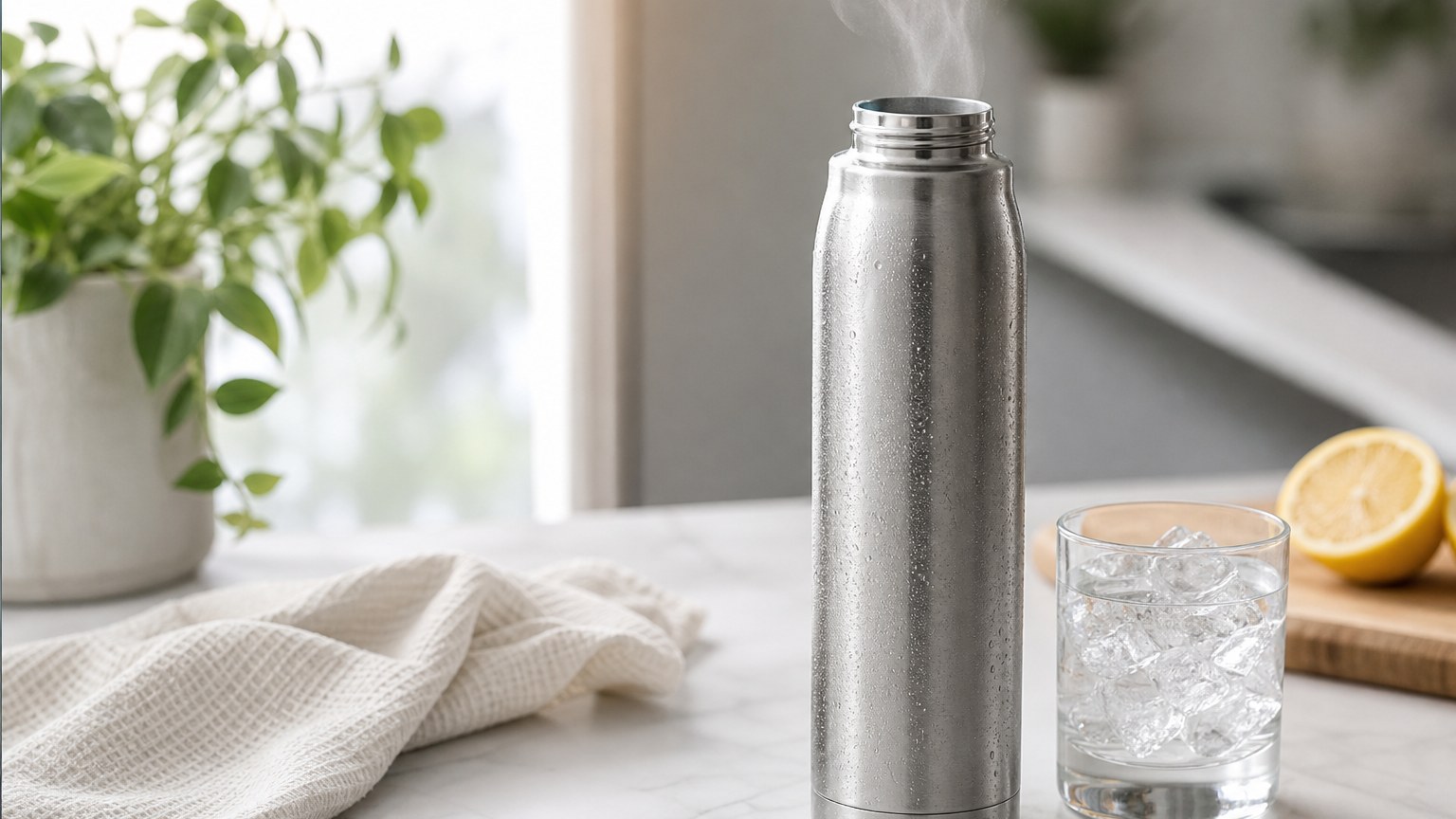
You have probably heard that everyone needs eight glasses of water a day. It is a tidy rule, easy to remember, and not really based on much. Actual water needs vary with body size, activity, climate, and diet. The good news is that figuring out a target for yourself is not complicated.
A better starting point
Health authorities tend to suggest a total daily fluid intake of around 2.7 liters for women and 3.7 liters for men, but that total includes water from food and other drinks, not just what you sip from a bottle. Roughly 20 percent of most people's water comes from food, especially fruits, vegetables, and soups. So the amount you actually need to drink is lower than those headline numbers.
A practical approach: aim to drink somewhere between 2 and 3 liters of plain water across the day, then adjust based on how you feel and what you are doing. If you own a 750 ml bottle, that is three to four refills. A one-liter bottle means two to three.
Things that push your needs up
- Exercise: A hard workout can cost you half a liter to a full liter of sweat per hour. Drink before, during, and after.
- Heat and altitude: Hot weather and high elevations both increase fluid loss, sometimes dramatically.
- Caffeine and alcohol: Both are mild diuretics, so a heavy coffee or a night out means you need to top up.
- Illness: Fever, vomiting, and diarrhea all drain fluids fast and call for extra intake.
- Pregnancy and breastfeeding: Both raise daily requirements noticeably.
The simplest signal: check your urine
Forget counting milliliters if it stresses you out. The clearest feedback loop is the color of your urine. Pale straw yellow means you are well hydrated. Dark amber means you are behind and should drink up. Completely clear all day long can mean you are overdoing it slightly, which is rare but possible.
Why a bottle beats willpower
Most people who struggle with hydration are not unwilling to drink water, they simply forget. Having a marked bottle on your desk turns an abstract goal into something visible. When you can see that you are only a third of the way down by lunch, you naturally drink more. Bottles with volume markings or time stamps take this further, giving you gentle checkpoints through the day.
Can you drink too much?
Yes, though it is uncommon. Drinking extreme amounts in a short window can dilute the sodium in your blood, a condition called hyponatremia. This mostly affects endurance athletes who chug water without replacing electrolytes. For everyday life, spacing your intake across the day rather than gulping a liter at once is all the caution you need.
Signs you are already behind
Thirst is a late signal, so waiting until you feel it means you are playing catch-up. Learn to notice the earlier, subtler cues instead. A dull afternoon headache, difficulty concentrating, or a sudden dip in energy are all common signs of mild dehydration that people usually blame on tiredness or hunger. Dry lips, a slightly dry mouth, and infrequent bathroom trips point the same way. If you feel foggy at your desk around mid-afternoon, try a glass of water before reaching for more coffee or a snack; surprisingly often, water is what your body was actually asking for.
Set a realistic target, keep a bottle within arm's reach, glance at the color check now and then, and drink a bit more on hot or active days. That is the whole system. It works far better than any rigid rule because it responds to your actual life.