Cold retention gets all the attention, but for a lot of people the real test is coffee that's still hot at 11 a.m. after being poured at 7. The same vacuum wall that keeps ice frozen also traps heat, but hot drinks play by slightly different rules, and a few of them will surprise you.
Why hot is harder than cold
The bigger the temperature gap between your drink and the room, the faster heat moves across it. Ice water sits maybe 40 to 50 degrees below room temperature. Fresh coffee is often 100+ degrees above it. That larger gap means heat pushes out harder, so hot drinks tend to fade faster than cold ones in the exact same bottle.
That's why you'll see a bottle rated "24 hours cold, 12 hours hot." It's not a typo. The hot number is lower because physics is working against it harder.
What actually keeps coffee hot for hours
Fill it right to the top
This matters even more for hot than cold. A half-full bottle has a big air pocket, and that trapped air cools fast, then pulls heat out of your coffee to fill the void. Fill it near the brim and cap it quickly. If you only want a small amount, use a smaller bottle rather than a big one half full.
Pre-heat the bottle
Cold steel is a heat sponge. Pour in a splash of boiling water, swirl it for 30 seconds, dump it, then add your coffee. That little step can add an hour or more to how long it stays genuinely hot instead of lukewarm. Skip it and your first ten minutes go into warming the metal.
Mind the lid
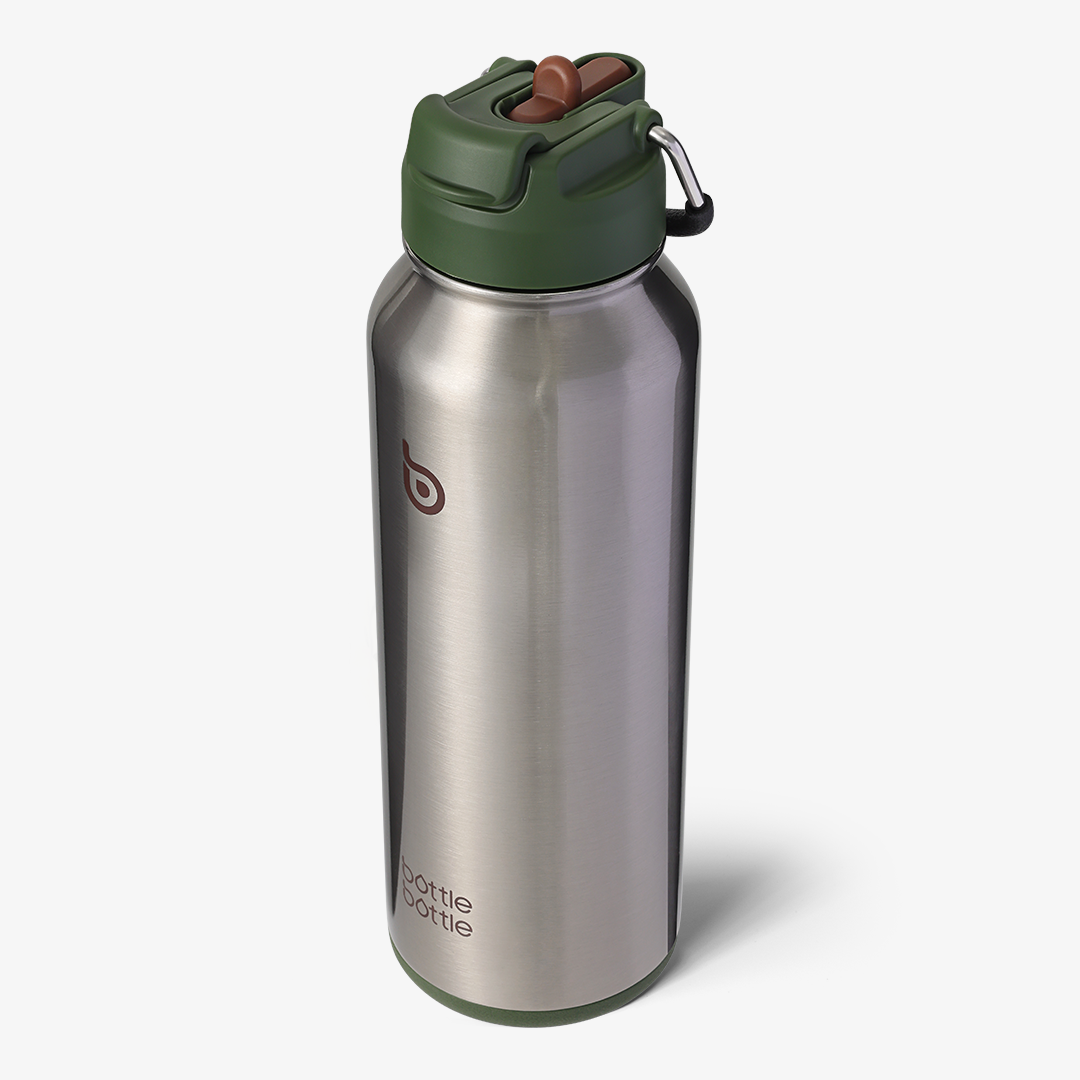
Hot drinks lose the most heat through the opening. A sealed screw lid holds heat far better than a flip straw or an open sip spout. If you want coffee hot for the long haul, a leakproof screw-top or a lid with a small closable drink hole beats a wide chug opening every time.
Can it get too hot?
Yes, and this catches people off guard. A quality vacuum bottle can keep coffee near-scalding for a couple of hours. Pour it at 200 F and take a swig 20 minutes later and you can genuinely burn your mouth, the bottle did its job too well. Let it breathe for a minute after pouring, or expect the first sips to be hotter than a paper cup would ever be.
A word on carbonation and dairy
Two things to keep out of a sealed insulated bottle. First, carbonated drinks, the pressure builds with no easy release and can make the lid pop or spray, and it stresses the seal. Second, milk and dairy-heavy drinks if you're leaving them for hours, warm milk in a sealed bottle is a food-safety issue and a smell you won't forget. A milky latte for your morning commute is fine. Milk sitting warm all day is not.
Realistic hot-retention numbers
For a solid double-wall vacuum bottle, used normally:
- Piping hot (still could burn you): 1 to 3 hours
- Comfortably hot and enjoyable: 4 to 8 hours
- Warm but past its best: up to 12 hours in a well-sealed bottle kept shut
Open it every 20 minutes for a sip and those numbers shrink. Keep it sealed on a desk and you'll hit the high end.
Who a hot bottle isn't for
If you drink your coffee fast and refill, insulation barely matters, a regular mug is fine and cheaper. The insulated bottle earns its keep for the person who sips slowly over hours, commutes, works outdoors, or just hates the reheat cycle. If that's not you, don't overspend chasing a hot-hold spec you'll never use.
Does size and shape change hot performance?
Same rules as cold, flipped. A tall, narrow bottle with a small opening holds heat better than a squat, wide-mouth one, because there's less surface at the top for warmth to escape and less air swapping when you sip. A bigger bottle also coasts longer thanks to more thermal mass, but only if you fill it. A 24 oz bottle with 8 oz of coffee rattling around the bottom will disappoint you no matter how good the vacuum is, all that empty space is the enemy. Match the bottle size to how much you actually drink in a sitting, and pick a screw lid over a flip spout if hot-hold is the priority.
The bottle can't create heat, it can only slow the loss. Give it a full fill, a warm start, and a tight lid, and that morning pour will still be steaming when you'd otherwise be reaching for the microwave.